In the intelligent era, F5G (Fifth Generation Fixed Network ) advanced represented by all-optical network (AON) technologies such as 50G PON (Passive Optical Network) have built a foundation for digital economy development. It offers high-speed connectivity and low latency and supports multiple services and applications. This article addresses the potential application scenarios of 50G PON.

What is 50G PON?
50G PON is the next-generation PON technology standardized by the ITU-T that uses the point-to-multipoint (P2MP) topology and time division multiplexing (TDM) technology. It supports single-frame multi-burst, registration window elimination, Co-DBA (Centralized Dynamic Bandwidth Allocation), PON slicing, and digital signal processing (DSP) technologies. In addition, it supports 50 Gbps uplink and downlink over a single wavelength, ODN (Optical Distribution Network) infrastructure, coexistence with 10G PON or GPON, energy saving, low latency, and high reliability. It provides a bandwidth five times faster than 10G PON.
Application Scenarios
1) Home Ultra-High Broadband Access
As home business traffic increases, users require high bandwidth, low latency, and jitter for broadband access applications such as 4K/8K video, VR/AR/XR, naked-eye 3D, online gaming, online education, and smart homes. 50G PON provides low latency, jitter, and high bandwidth options to address these needs.

2) Enterprise and Campus Network
The 50G PON provides high-bandwidth network access and low latency, making it suitable for enterprise and campus network applications such as hospitals, Smart schools, Smart factories, parks, and more, aiding their digital transformation. It also offers video surveillance, internet, and voice call services.
3) Mobile and Wi-Fi Backhaul
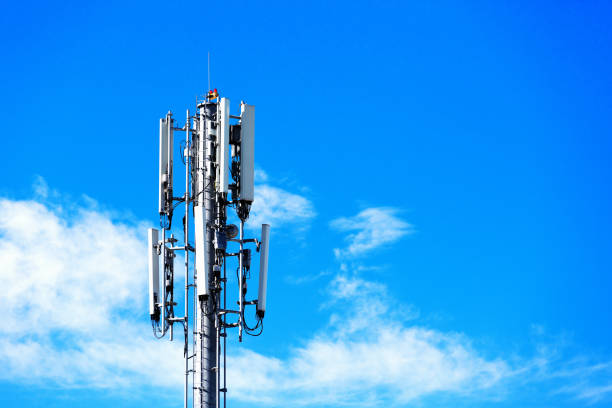
In mobile backhaul such as 5G base station, 50G PON offers high bandwidth, low latency, power consumption, size, and cost. With the widespread adoption of Wi-Fi 6 and Wi-Fi 7, Wi-Fi networks are rapidly moving from hundreds of megabits to gigabit coverage. The rapid development of Wi-Fi networks necessitates higher standards for backhaul access. With its vast bandwidth, 50G PON can provide over 50Gbps of symmetrical bandwidth, fulfilling the high-speed demands of the Wi-Fi network backhaul.
4) Underground Mine Communication
Underground mine communication has problems with low signal coverage, low anti-interference, weak penetration, and unstable signal transmission. 50G PON can be connected to different terminals in the underground mine to deliver stable signal transmission and low latency.

Future Prospects
From a broader perspective, PON evolves significantly every 8 to 10 years. Gigabit broadband, which uses 10G PON fiber access technology, is currently the prevailing standard. Compared to 10G PON, 50G PON increases bandwidth five times while maintaining low latency, jitter, high reliability, and security. The release of the 50G PON standard has attracted significant interest in the industry, and the maturation of the industrial supply chain has been prioritized. The 50G PON industry supply chain is predicted to evolve gradually by 2025, and 50G PON products will be commercially available in 2025.
Conclusion
In conclusion, 50G PON is a crucial driver of digital transformation and promotes the development and popularization of digital society. It offers five times the bandwidth of a 10G PON, low latency, and high reliability. In addition, it is used in home ultra-high broadband access, enterprises, and other application scenarios.
Sun Telecom specializes in providing one-stop total fiber optic solutions for all fiber optic application industries worldwide. Contact us if you have any needs.





 Position :
Home>
News & Tutorial
>Products
Position :
Home>
News & Tutorial
>Products











 ics@suntelecom.cn
  +86 18964888554
 Building No.145, Lane 666 Xianing Road, Jinshan Industrial Zone, Shanghai 201506, China




 +86 21 60138638


