

News & Tutorial

To Provide You With The Latest Product Information And Company News

Do you know your Internet Explorer is out of date?

To get the best experience for our site, we recommend you upgrade to the latest version of Internet Explorer, or select another web browser, a list of the most popular web browsers can be found below

You can download the main browser here:

Position : Home> News & Tutorial >Products

How to Choose the Right DWDM Transceivers for the DWDM Mux/Demux Application?

Date: 2025-10-24 17:20:50

DWDM (Dense Wavelength Division Multiplexing) is an ideal solution for long-distance data transmission. It enables fiber optic networks to transmit signals of multiple wavelengths simultaneously, extending the bandwidth of fiber optic networks to achieve high-speed and channel capacity network transmission. DWDM transceiver and Mux/Demux are vital components in the DWDM network system. How to choose DWDM transceivers for DWDM Mux/Demux? Find the answer in this article.
 
\

What is a DWDM Transceiver?
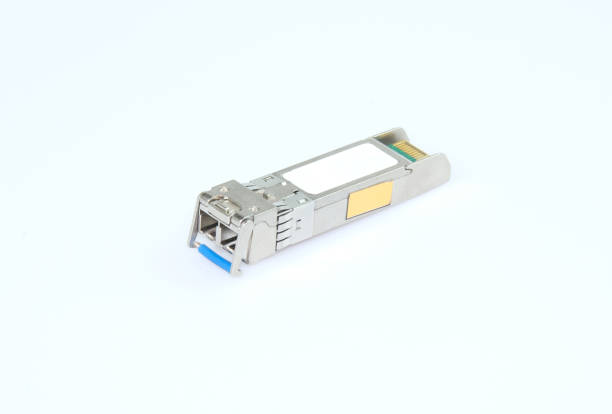
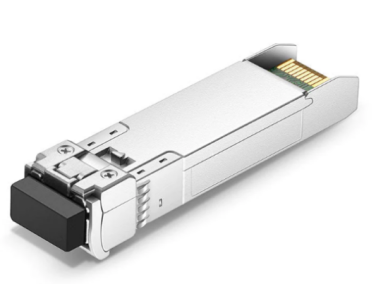
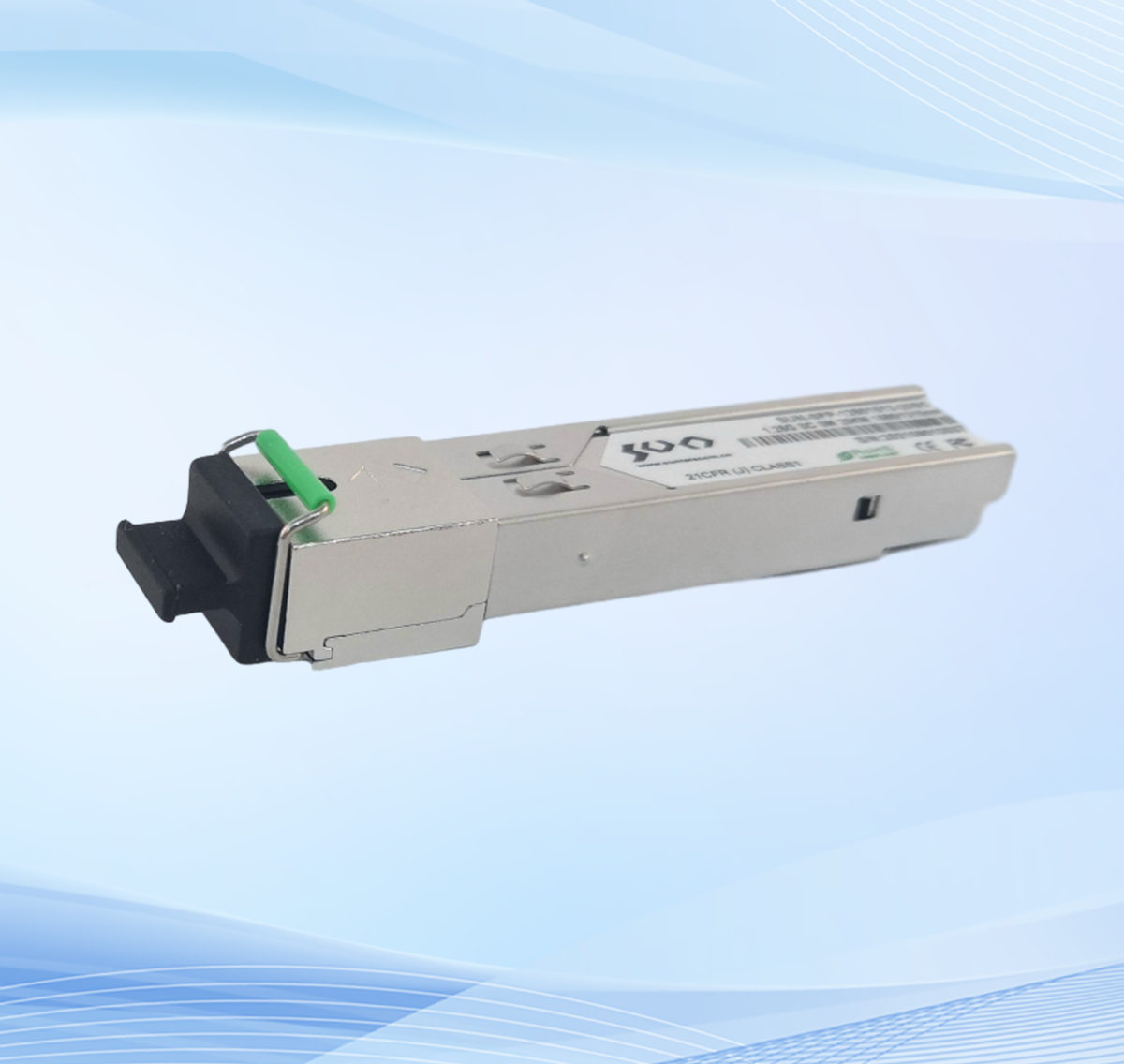
DWDM transceiver is a fiber optic transceiver with unique features and functions. It is designed for single-mode fiber (SMF) and operates at a nominal DWDM wavelength from 1528.38 to 1563.86 nm (Channel 17 to Channel 61) as specified by the ITU-T. In addition, it converts the electrical signal to an optical signal and vice versa. DWDM transceiver provides high-capacity and long-distance transmission, supports data rates up to 10 Gbps, and spans distances of up to 120 km.
 
What is DWDM Mux/Demux?
Mux (Multiplexer) is a module at the transmitter end that delivers several data signals together for transporting over a single fiber. Demux (Demultiplexer) is a module at the receiver end that separates the signals that come together and passes each channel to an optical receiver. DWDM Mux/Demux module multiplex multiple DWDM channels into one or two fibers. It can increase the bandwidth of fiber optic networks with low cost and long transmission distances.

\

Factors to Consider When Choosing the Right DWDM Transceiver for DWDM Mux/Demux
1)  Wavelength
Channel Spacing: Guarantee that the DWDM transceiver operates on the specific DWDM grid defined by your network infrastructure. DWDM systems use a predefined grid of wavelengths (typically spaced at 100 GHz or 50 GHz) to bypass interference between DWDM channels. Make sure your DWDM transceivers match the grid to avoid wavelength collisions.
Wavelength Assignment: Assure that the DWDM transceivers align with the specific wavelength channels in your DWDM system. DWDM typically operates in the C-band (1528-1561 nm) and L-band (1577-1603 nm). Check that the DWDM transceivers' wavelengths match the available channels.

2) Transmission Distance
Distance Requirement: DWDM transceivers come in various reach options, including short, metro, long, and ultra-long-haul. Choose DWDM transceivers that match your required transmission distance.
Amplification and Regeneration: For long transmission distances, consider the need for optical amplification or regeneration points in your network. This may impact the choice of DWDM transceivers and the overall network design.

3) Data Rate
Data Rate: Determine the required data rate for your network. DWDM transceivers are available in various data rates, such as DWDM SFP, SFP+, SFP28, etc.
Future-Proofing: Consider future scalability and growth. If you anticipate increased data rates in the future, choose DWDM transceivers that can support higher data rates when needed.

4) Output Power (TX Power) and Receiver Sensitivity (RX Sensitivity)
TX Power: Light-emitting power represents the intensity of the optical signal emitted by the DWDM transceiver. Excessive power can induce signal distortion and risk harm to receiving equipment, whereas insufficient power can result in signal loss and damage network performance.
RX Sensitivity: Receiver sensitivity describes the DWDM transceiver's capacity to detect and receive faint optical signals. Choose DWDM transceivers with high sensitivity to ensure robust signal reception.

5) Dispersion Management
Dispersion Management: Consider the need for dispersion management techniques, such as dispersion compensation modules (DCM) or dispersion compensation fibers (DCF), to mitigate the impact of dispersion on signal quality.

Conclusion
In conclusion, choosing the right DWDM transceivers for Mux/Demux applications is vital for a high-performance fiber optic network. By carefully considering these factors, you can guarantee that your DWDM transceivers seamlessly integrate with DWDM Mux/Demux and optimize network performance.
Sun Telecom specializes in providing one-stop total fiber optic solutions for all fiber optic application industries worldwide. Contact us if any needs.

Position : Home >Products

Related News

Unclosing the Value of DWDM Transceiver for Your DWDM Network Application

DWDM transceiver is a crucial part of the DWDM network syste...

Learn More

How to Choose the Right OADM for Your WDM Mux/Demux Application?

In the WDM Mux/Demux system, OADM (Optical Add-Drop Multiplexe...

Learn More
Dispersion Compensation Module (DCM): The Cost-Effective Solution for Long-Haul DWDM Network

A dispersion compensation module (DCM) is a cost-effective sol...

Learn More
ROADM: Best Choice for 400G WDM Transmission

To solve some of the 400G WDM transmission problems, such as...

Learn More
Optical Performance Monitoring (OPM) for High Speed DWDM Networks

Optical performance monitoring (OPM) provides cost-effective and...

Learn More