In CATV over FTTH applications, an optical receiver is a home-based optical termination device that converts optical TV signals into electrical RF signals for analog or digital TV access. In addition, it uses a low-power optical detector, preamplifier, and AGC (Automatic Gain Control) technology to meet the needs of FTTH CATV reception. This article provides a basic understanding of FTTH optical receivers.
What is an FTTH Optical Receiver?
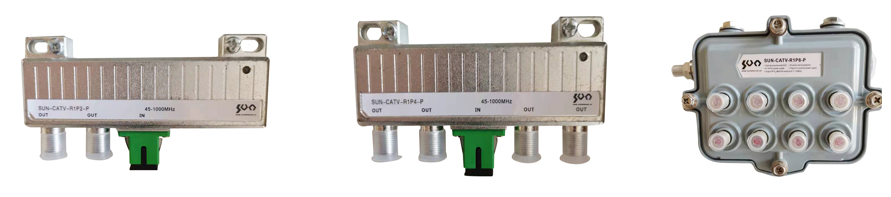
FTTH optical receiver is a home-based optical receiver which caters for the ultimate development goal of the optical fiber access and is suitable for the FTTH network optical fiber user access terminal to realize the analog or digital signal access to the home.
What is the Role of FTTH Optical Receiver?
The role of an FTTH optical receiver is to convert the optical signal transmitted via fiber into an electrical signal using a photodetector, then amplify and condition the signal for output. FTTH optical receivers are predominantly deployed to receive broadcast CATV signals in a triple‑play scenario (alongside PON data channels). They typically adopt low‑power photodetectors, GaAs‑based amplifier technologies, and AGC to meet the demands of FTTH CATV reception.
How does it work
(1) Optical-to-Electrical Conversion – The optical signal from the fiber first reaches the photodetector and is converted into a weak electrical signal.
(2) Signal Amplification – This weak electrical signal immediately enters the preamplifier and main amplifier, where it gets boosted step by step to sufficient strength.
(3) Equalization & Attenuation – The amplified signal goes through the equalizer and attenuator for frequency compensation and fine level adjustment, ensuring signal quality.
(4) Power Output – The optimized signal is fed into the output amplifier for a final power boost, making it strong enough to drive multiple devices.
(5) Automatic Gain Control (AGC) Feedback – To keep the output stable, a portion of the output signal is taken and fed back to the AGC circuit. The AGC circuit then dynamically adjusts the attenuator, forming a closed-loop control system.
(6) Final Output – After all the above processing, a stable, high-quality RF signal is sent out through the output interface, ready to connect to your television or set-top box.
Features and Benefits
FTTH optical receiver provides the following features and benefits:
• High reliability and stability
• High-quality brushed aluminum case with good heat dissipation
• Low power consumption and cost
• Ultra-low noise and wide range of optical input power
• SC/APC or FC/APC connector
• Supports preamplifier and AGC
• Small size and easy-to-install
• Excellent linearity and flatness
Applications
FTTH optical receiver is used in FTTH access networks, CATV networks, etc.
Conclusion
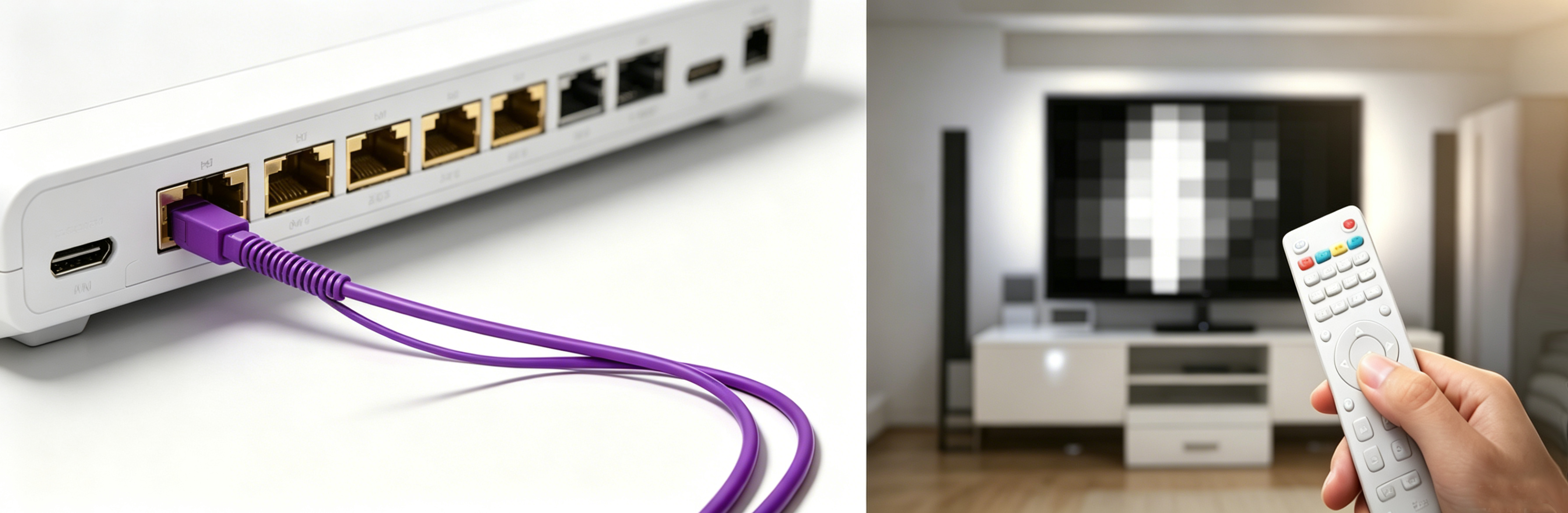
To sum up, a FTTH optical receiver is designed for use in FTTH networks, enabling analog or digital signal access to homes. Its main feature is low power consumption, AGC, small size, high reliability, reasonable internal circuit structure, and excellent performance indicators.
Sun Telecom specializes in providing one-stop total fiber optic solutions for all fiber optic application industries worldwide. Contact us if you have any needs.





 Position :
Home>
News & Tutorial
>Products
Position :
Home>
News & Tutorial
>Products










 ics@suntelecom.cn
  +86 18964888554
 Building No.145, Lane 666 Xianing Road, Jinshan Industrial Zone, Shanghai 201506, China




 +86 21 60138638


