

News & Tutorial

To Provide You With The Latest Product Information And Company News

Do you know your Internet Explorer is out of date?

To get the best experience for our site, we recommend you upgrade to the latest version of Internet Explorer, or select another web browser, a list of the most popular web browsers can be found below

You can download the main browser here:

Position : Home> News & Tutorial >Products

800G Optical Transceiver: Meeting The High-Speed Data Transmission Demand Driven By AI

Date: 2026-01-13 16:19:07

The increased demand for high-speed data transmission has reached unparalleled levels. AI (Artificial Intelligence ) has emerged as a driver in this paradigm shift. 800G optical transceivers offer high speed, making it essential for meeting this demand. This article discusses 800G optical transceivers in AI applications.


What is an 800G Optical Transceiver?

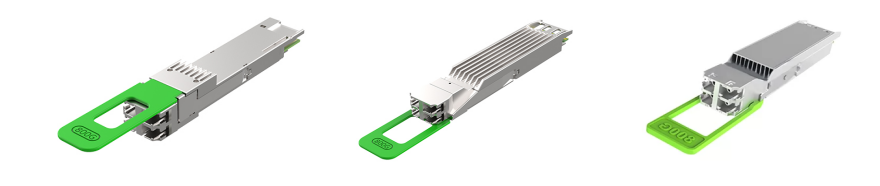
An 800G optical transceiver is a device that supports data transmission rates of 800Gbps. It offers high speed and power consumption in 800G links. Additionally, it can handle large amounts of data. It uses different form factors, such as QSFP-DD and OSFP, and is suitable for 800G Ethernet, data centers, cloud networks, and AI applications.


What are the Reasons Behind the Increased Demand for 800G Optical Transceivers?

1) Large-Scale Data Processing Demands
Training and inference of AI algorithms require extensive datasets. Hence, data centers must be capable of handling large amounts of data efficiently. 800G optical transceivers provide high bandwidth, which aids in meeting this issue.
2) Multitasking Concurrency
AI data centers usually need to handle numerous tasks at once, including image recognition and natural language processing.800G optical transceivers improve support for multitasking workloads.
3) Real-Time Requirement
In AI application scenarios, real-time data processing is required. For example, in autonomous driving systems, the large amount of data collected by sensors needs rapid transmission and processing. Optimizing system latency becomes a crucial factor in ensuring fast responses. 800G optical transceivers help to satisfy these real-time demands by lowering latency in data transmission and processing, which improves system responsiveness.

Why 800G Optical Transceivers Are Critical in AI?

1. Bandwidth Intensive AI Workloads: AI computing applications generate massive amounts of data across networks. 800G optical transceivers provide high bandwidth for intensive AI workloads.
2. Energy Efficiency: 800G optical transceivers are energy efficient. By enabling more data to be transmitted with fewer devices and infrastructure, they reduce the overall energy consumption of data centers and network operations, which aligns with global sustainability goals.
3. Data Center Inter-Connectivity: With the rise of cloud computing, the need for fast connections within data centers becomes critical. 800G optical transceivers enable faster and more reliable connections between data centers, boosting seamless data exchange and lower latency.
4. Transition to Spine-Leaf Architecture: As east-west traffic expands rapidly within data centers, the traditional three-tier architecture faces challenging tasks and heightened performance demands. 800G optical transceiver has accelerated the development of a Spine-Leaf architecture, which has numerous benefits such as high bandwidth utilization, scalability, predictable network latency, and enhanced security.
5. Future-Proofing: With an increase in the volume of data processed by AI applications, deploying 800G optical transceivers ensures that the network can handle the ever-increasing data demands, offering future-proofing for the infrastructure.

How AI Drives the Upgrade of Data Center Network Architecture?

The increased demand for 800G optical transceivers is closely related to architectural changes in data center networking. Traditional 3-tier architecture has access, aggregation, and core layers. The access layer connects end devices to the network. The aggregation layer consolidates connections and traffic from multiple access layer switches and relays them to the core layer. The core layer manages traffic between aggregation layers. Traditional 3-tier architecture increased latency, complexity, and cost, which have led to the adoption of more streamlined solutions. On the other hand, the 2-tier leaf-spine architecture incorporates the spine and leaf layer. The spine layer delivers a high-speed backbone interconnecting all leaf switches. The leaf layer connects to end devices and provides access to the network. The 2-tier leaf-spine architecture has a direct and more efficient path for data transfer between servers, reducing latency and enhancing overall network performance. Furthermore, it integrates smoothly with the capabilities of 800G optical transceivers, ensuring that the network infrastructure is suited for high-speed data transmission.

Conclusion

In conclusion, the 800G optical transceiver has earned noteworthy attention in AI due to its high speed, capacity, and low latency. The collaborative interchange between AI and high-speed optical communication will play a vital role in shaping the future of information technology infrastructure.
Sun Telecom specializes in providing one-stop total fiber optic solutions for all fiber optic application industries worldwide. Contact us if you have any needs.

Position : Home >Products

Related News

MTP/MPO Cassette: The Ultimate Solution for High-Density Data Center Application

MTP/MPO cassette helps to improve network operation efficiency and cabling system scalability.

Learn More

LC Uniboot Fiber Optic Patch Cord: The Ultimate Solution for Your High-Density Data Center Applications

LC (Lucent Connector) uniboot fiber optic patch cord (or patc...

Learn More
Pre-Terminated MTP/MPO Harness Cable: Is Your Best Choice for Data Center Application

Pre-terminated MTP/MPO harness cable provides a cost-effective ...

Learn More
400G CFP8 in the Data Center Options For Your Optical Transceiver Module

Major providers in the market have started to launch 400G an...

Learn More
Data Center Cabling Solution: Active Optical Cable

As data rates rise and data center grows in size, copper ca...

Learn More